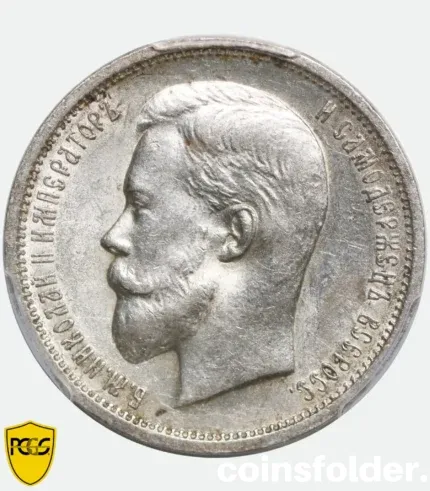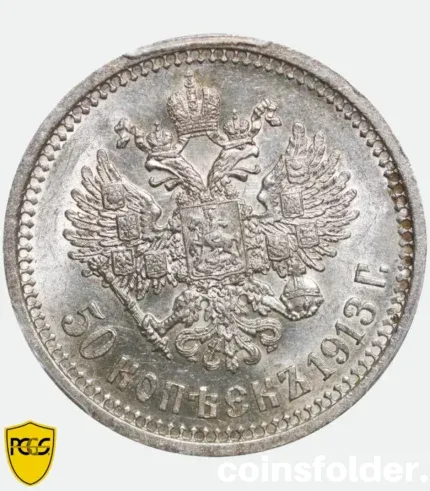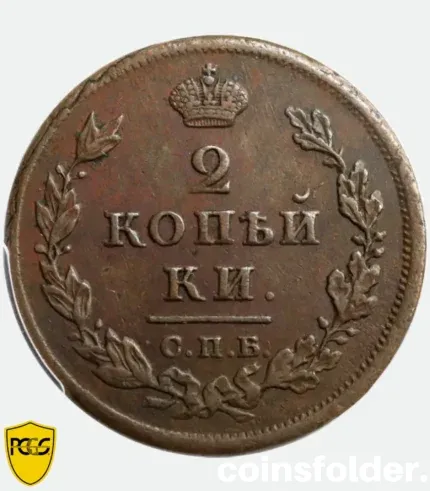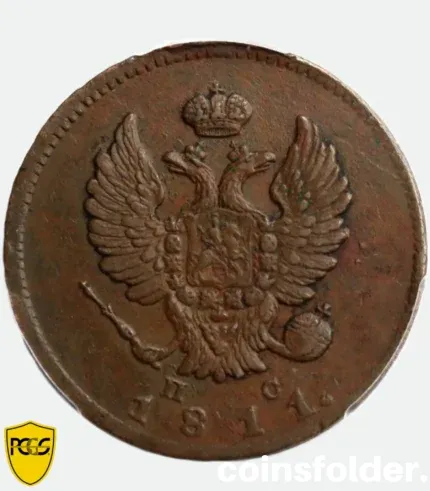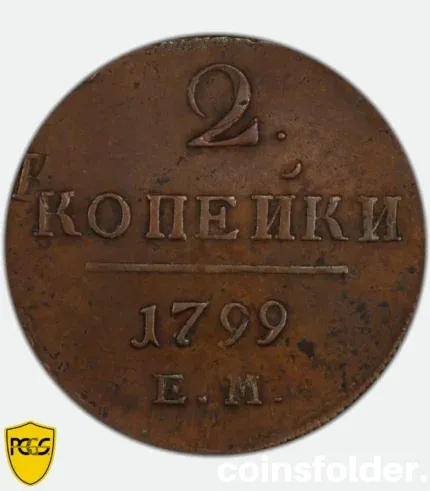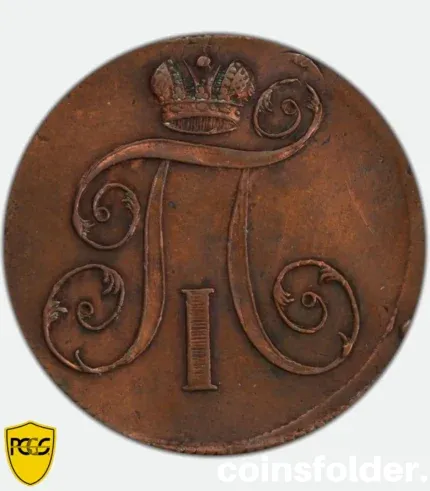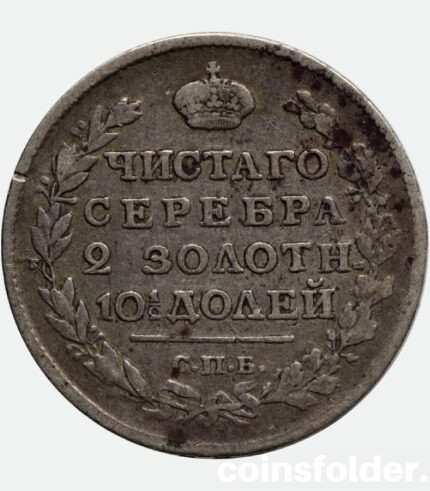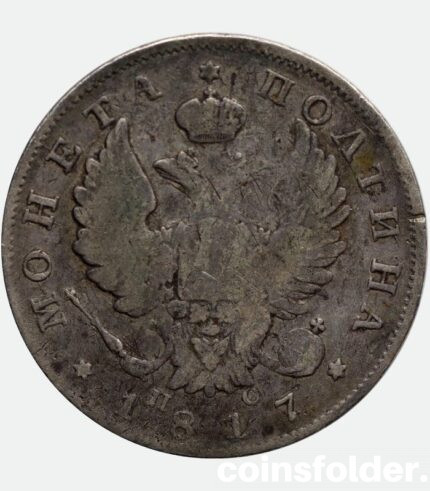
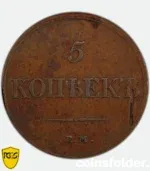
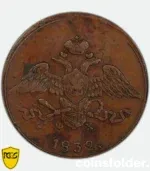
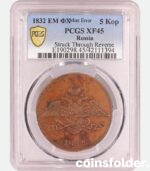
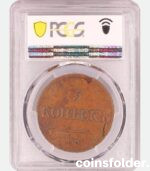
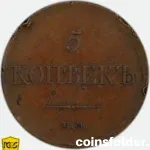
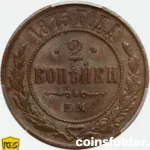
1832 Russian 5 Kopecks (ЕМ-ФХ) – Mint Error Coin, XF45
114,99 €
| Metal | Copper |
| Weight | 22,72 g. |
| Diameter | 36,5 mm. |
| Bitkin # | 485 |
1 in stock
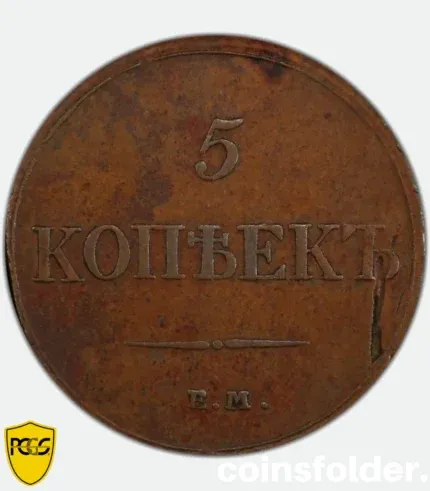
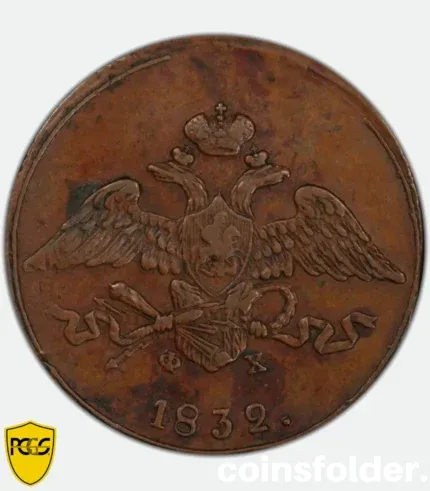
1832 Russian 5 Kopecks (ЕМ-ФХ) – Mint Error Coin, XF45
Rare 19th-Century Russian Mint Error
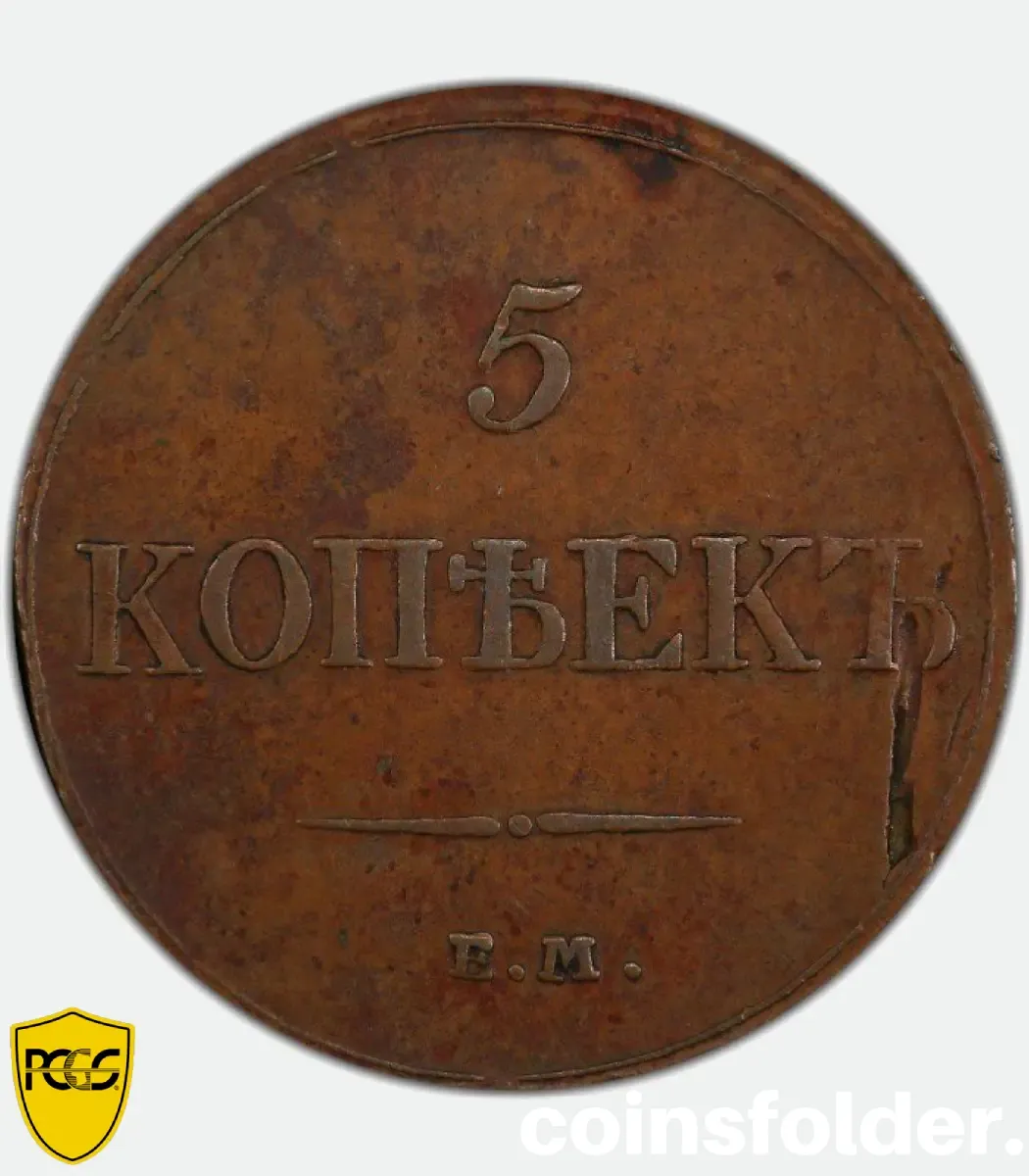
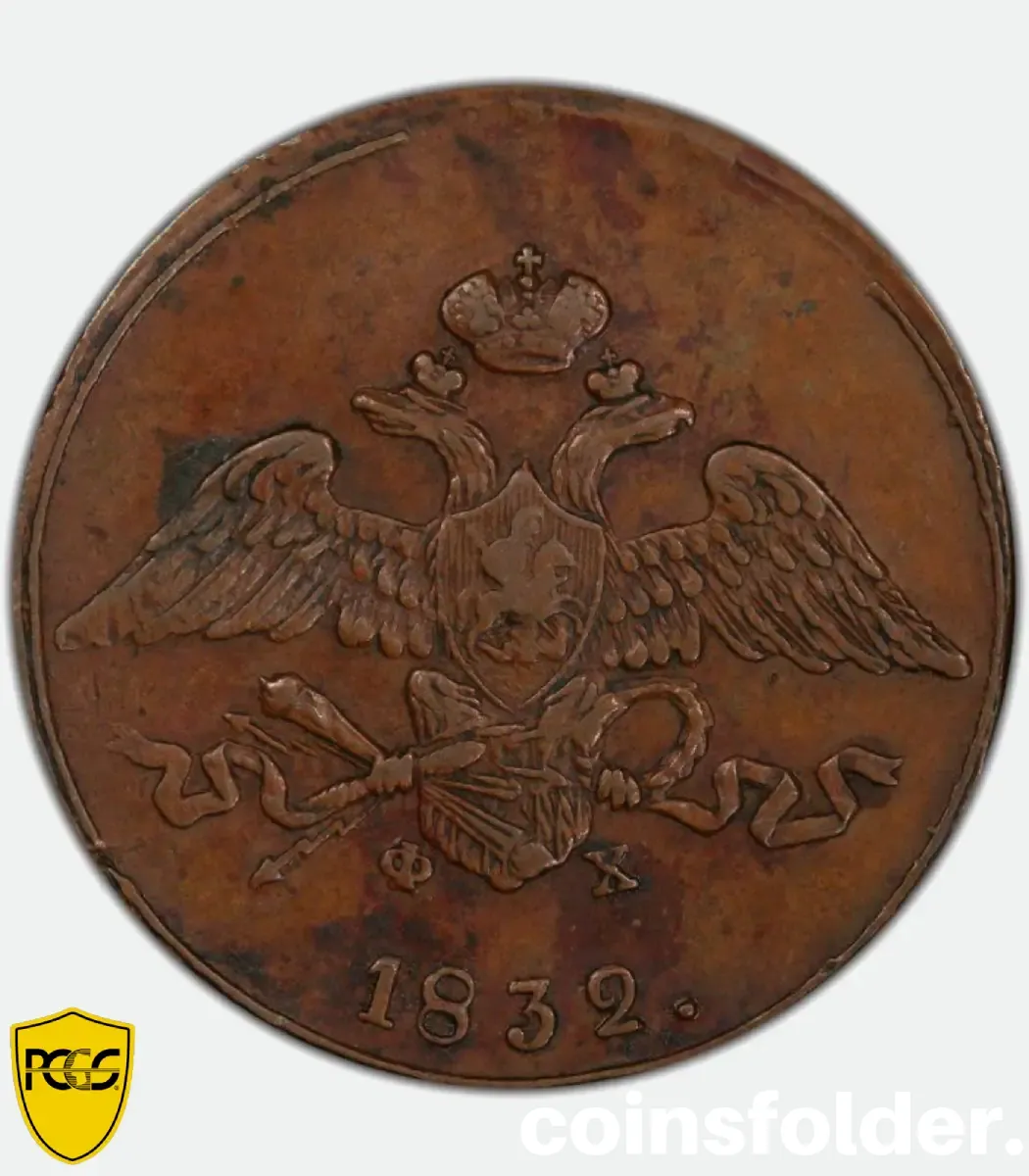
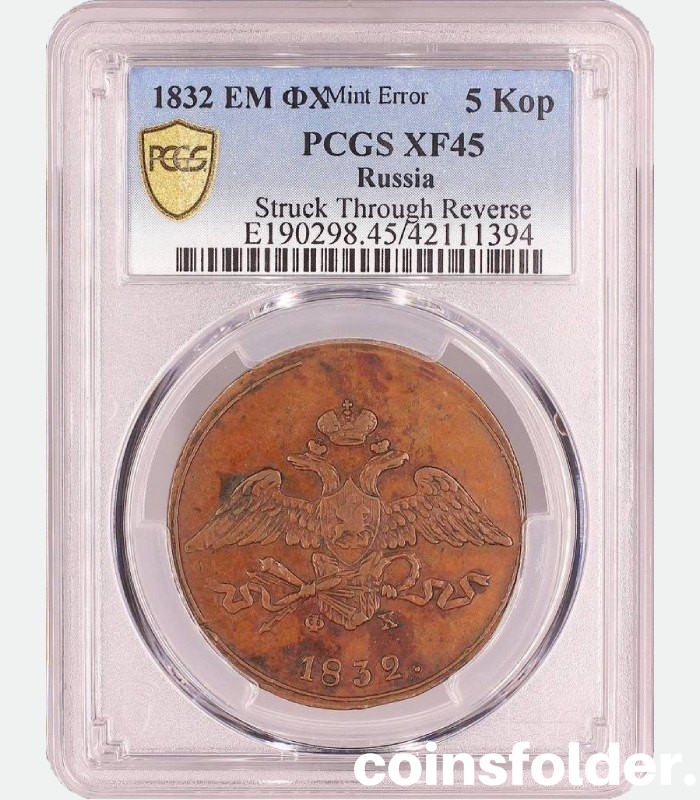
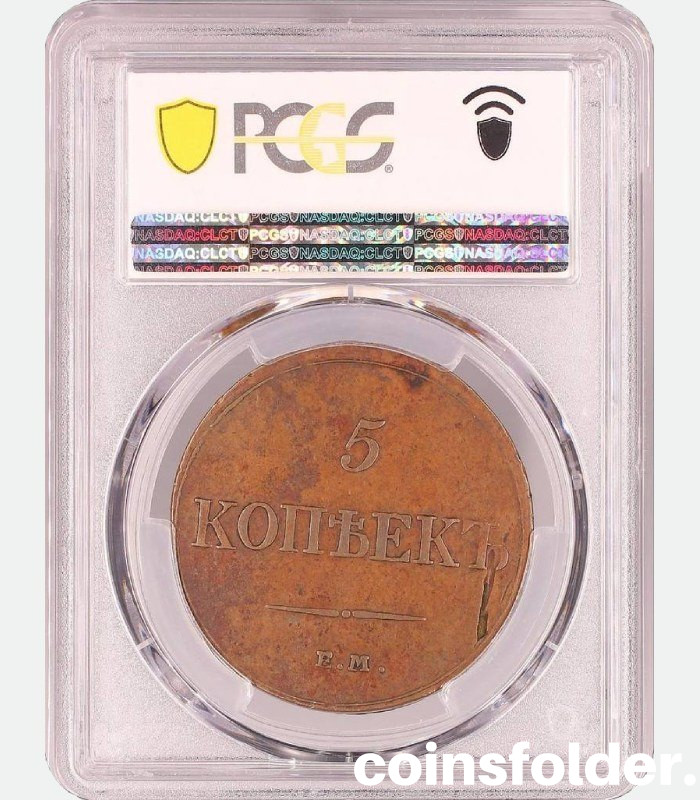
This 1832 Russian 5 Kopecks is a scarce copper coin featuring a documented mint error – struck through reverse, professionally certified PCGS XF45. Issued at the Ekaterinburg Mint and marked ЕМ-ФХ, this coin belongs to the reign of Emperor Nicholas I and represents an advanced stage of Imperial Russian copper coinage. Moreover, the presence of a clearly identified mint error significantly enhances its numismatic importance and collector demand.
Struck Through Reverse Error Characteristics
Unlike standard circulation issues, this 1832 Russian 5 Kopecks displays a struck through reverse mint error, which occurred when foreign material interfered between the die and the planchet during striking. As a result, areas of the reverse design show distortion and weakness that differ clearly from normal wear or post-mint damage. Therefore, the error remains easily identifiable and adds strong visual interest. Importantly, PCGS has officially attributed this feature, confirming it as an authentic mint error.
Condition, Detail, and PCGS Certification
Certified Extremely Fine (XF45) by PCGS, this 1832 Russian 5 Kopecks retains strong detail with moderate, even circulation wear. Additionally, the imperial eagle on the obverse remains well defined, while the denomination, date, and mint marks ЕМ-ФХ on the reverse are clearly legible. The coin displays an attractive natural copper patina consistent with age and originality. PCGS certification guarantees authenticity, professional attribution of the mint error, and long-term preservation.
Historical and Numismatic Context
During the reign of Nicholas I, the Ekaterinburg Mint played a crucial role in producing large copper denominations for the Russian Empire. However, mint errors such as struck-through pieces rarely survived, because mint inspectors typically removed defective coins from circulation. For this reason, certified error examples from the early 1830s remain scarce today. Consequently, the 1832 Russian 5 Kopecks mint error holds strong appeal among collectors of Imperial Russian coinage and specialized error collections.
Collector Appeal and Long-Term Value
This 1832 Russian 5 Kopecks appeals to collectors of Russian Imperial copper coins, PCGS-certified mint errors, and historically significant 19th-century issues. Furthermore, its XF45 grade, clear struck-through reverse attribution, and professional certification make it suitable for advanced collections and long-term holdings. Ultimately, this coin offers a rare opportunity to acquire an authenticated Russian mint error with strong historical character and lasting numismatic value.

Country of Origin
Russia

Material
Copper

Original
100 % Authentic

Measurements
36,5 mm

Weight
22,72 g

Condition
XF45
| Weight | 0,060 kg |
|---|---|
| Brand | Nicholas I |
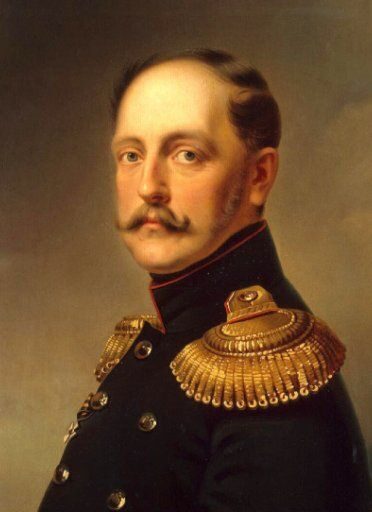
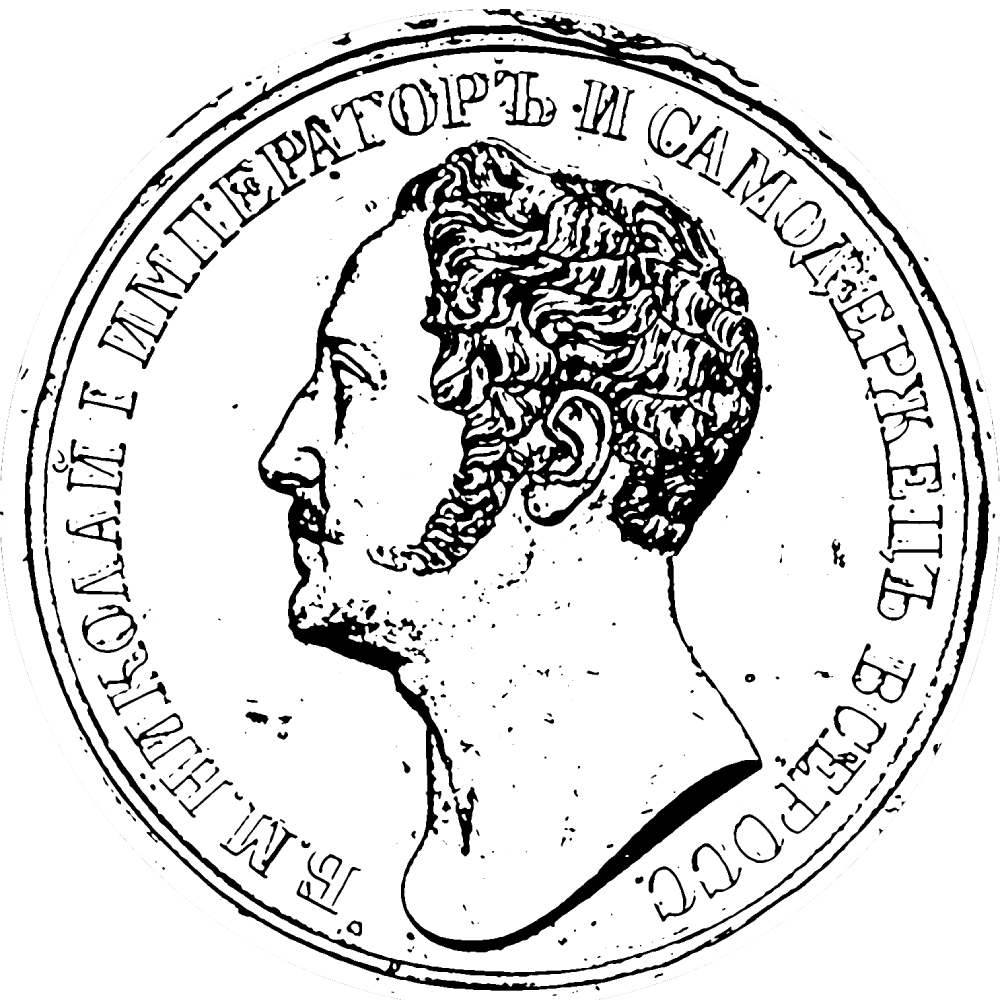
Nicholas I (1826-1855)
Nicholas I (1826-1855) – Nikoláy I Pávlovich, 6 July 1796 – 2 March 1855) reigned as Emperor of Russia, King of Poland and Grand Duke of Finland from 1825 until his death in 1855. He was the third son of Paul I and younger brother of his predecessor, Alexander I. Nicholas inherited his brother's throne despite the failed Decembrist revolt against him. He is mainly remembered in history as a reactionary whose controversial reign was marked by geographical expansion, economic growth, and massive industrialisation on the one hand, and centralisation of administrative policies and repression of dissent on the other. Nicholas had a happy marriage that produced a large family; all of their seven children survived childhood.
Related products