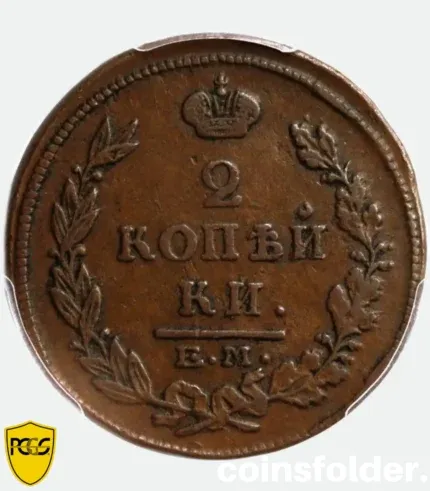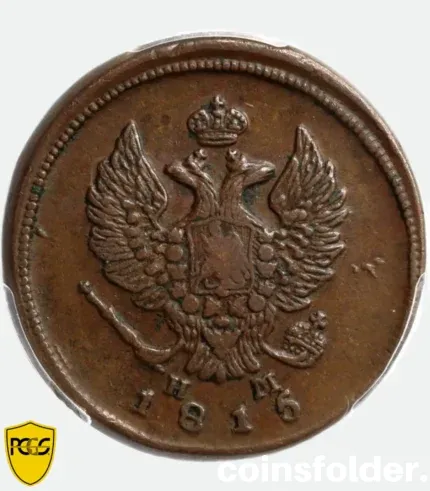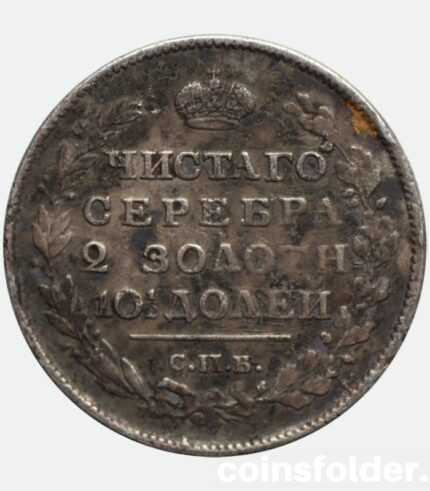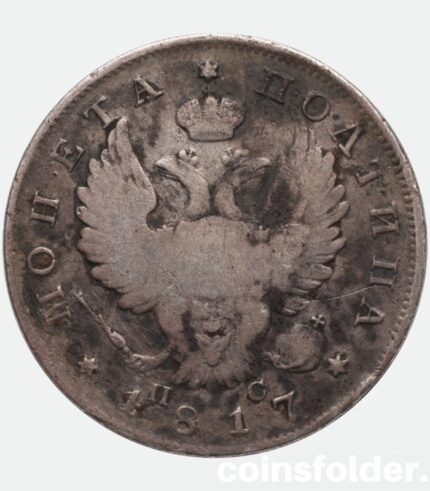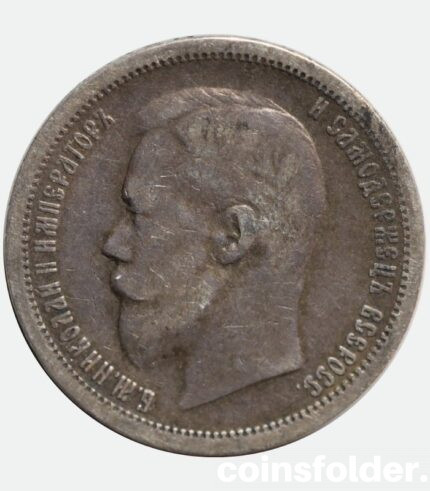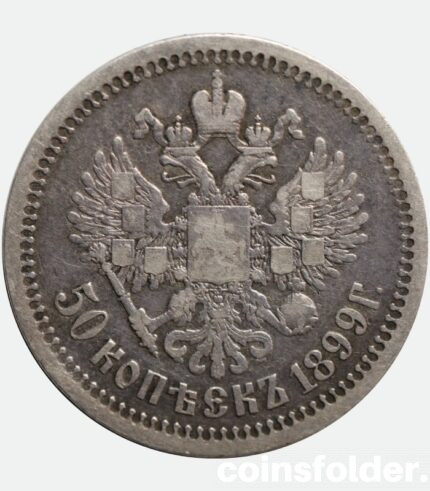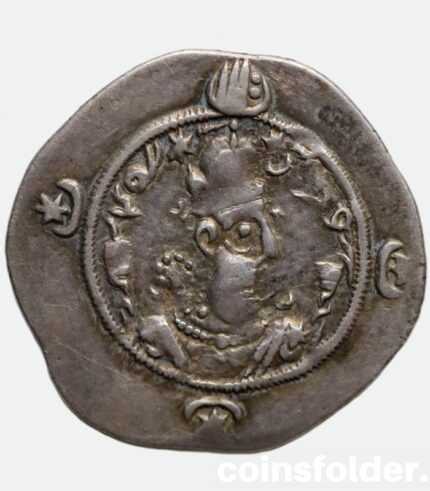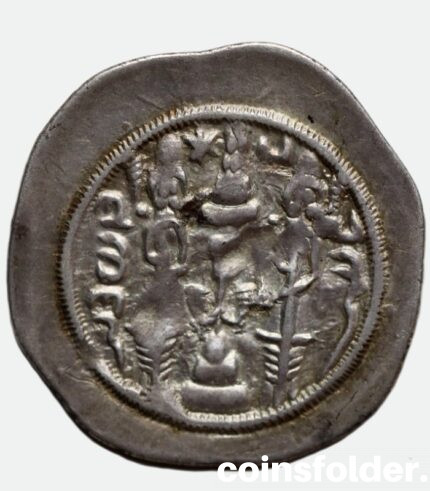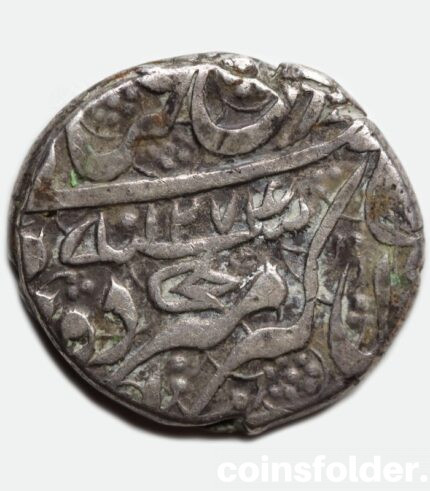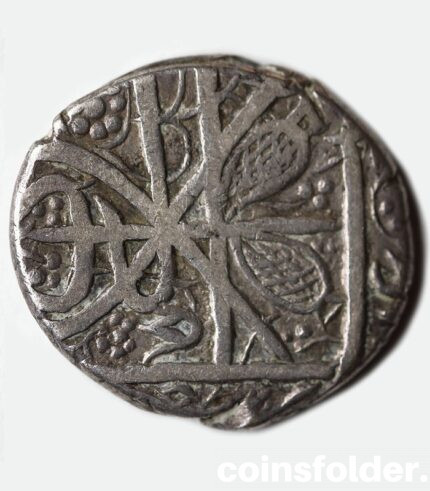

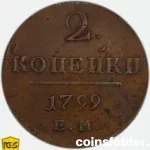
1798 Russian 2 Kopecks (ЕМ) – Double Strike Error Coin, XF40
199,99 €
| Metal | Copper |
| Weight | 20,48 g |
| Diameter | 35 mm |
| Edge | ///// |
| Bitkin # | 114 |
1 in stock
1798 Russian 2 Kopecks (ЕМ) – Double Strike Error Coin, XF40
Rare 18th-Century Russian Mint Error
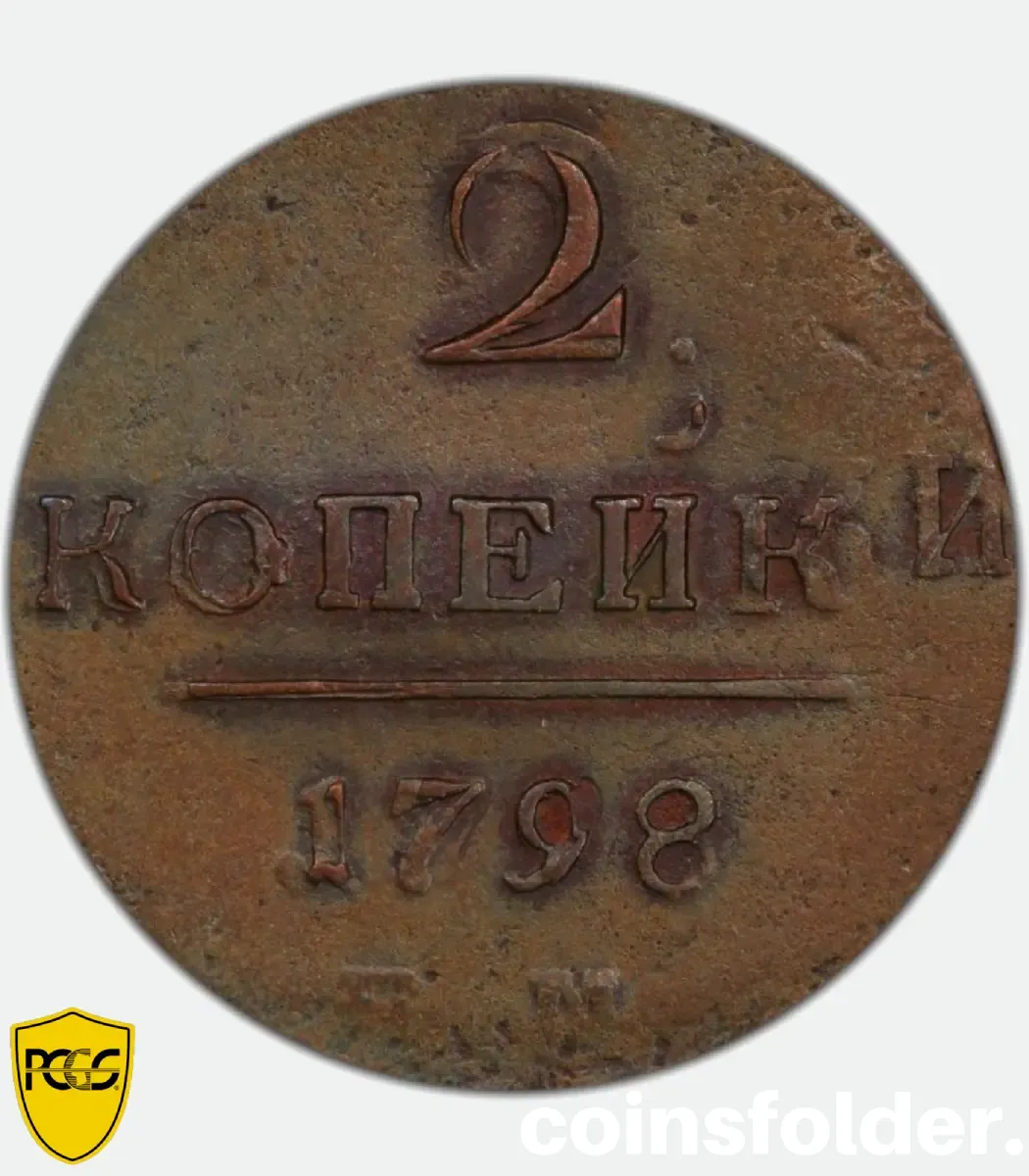
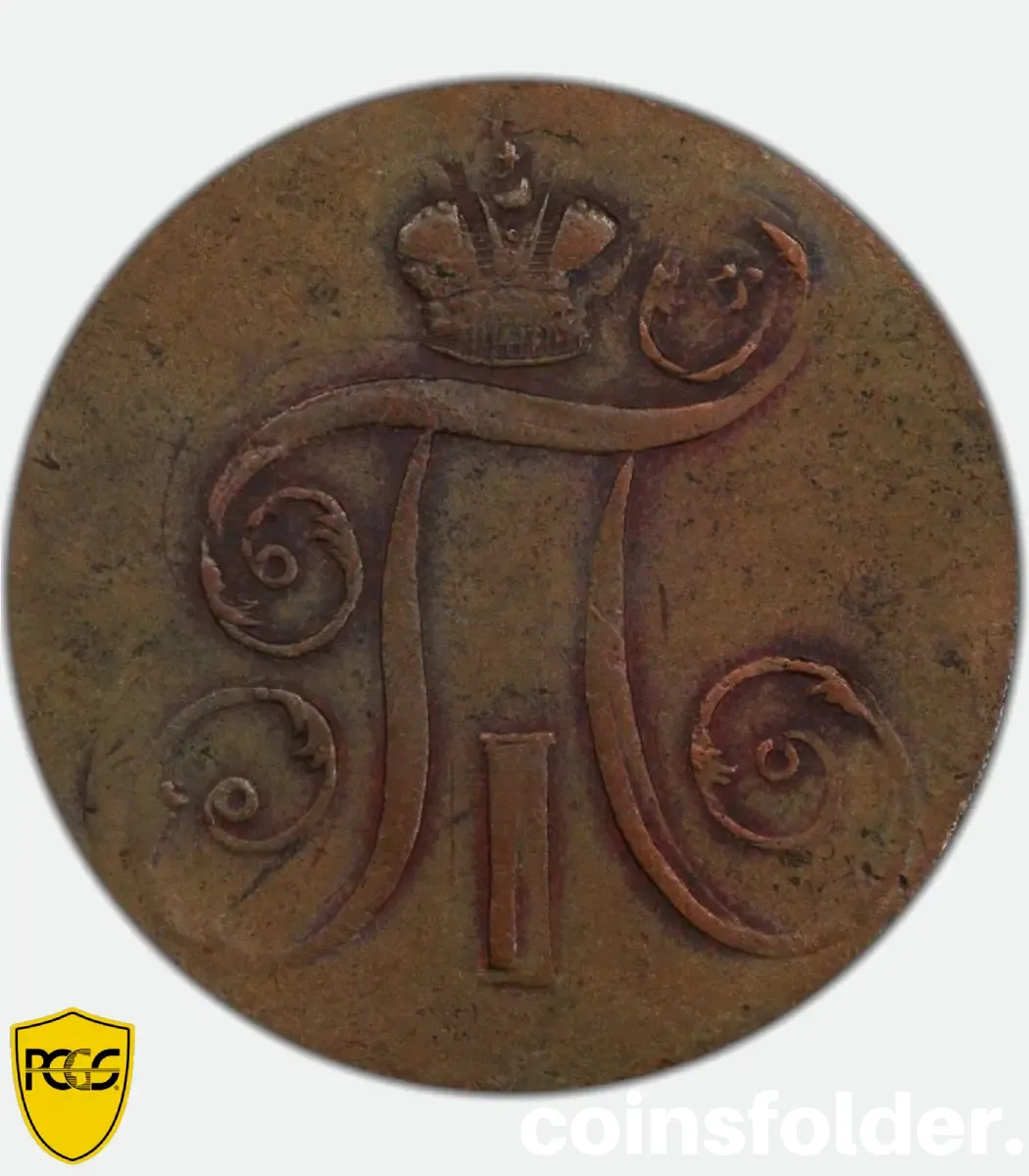
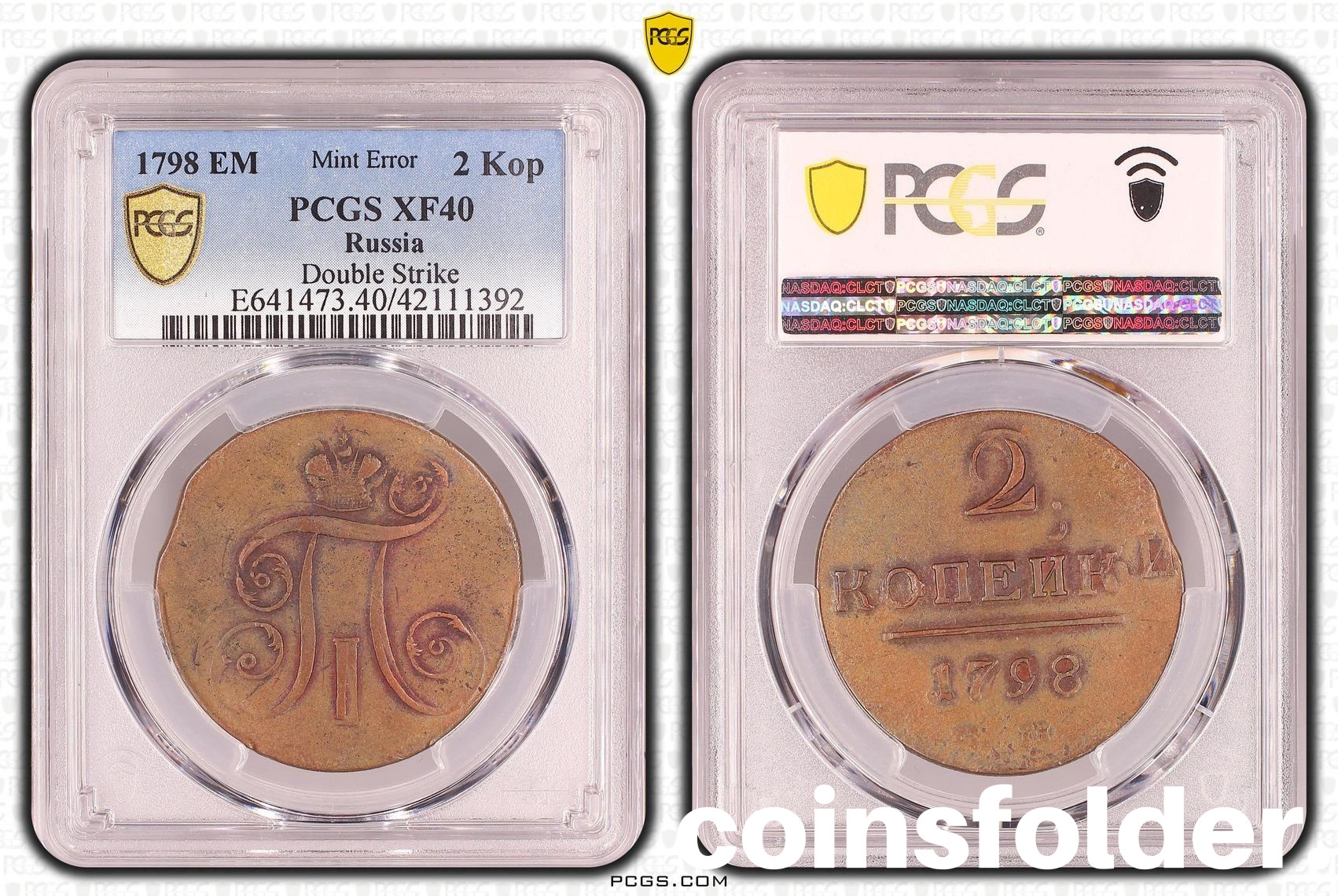
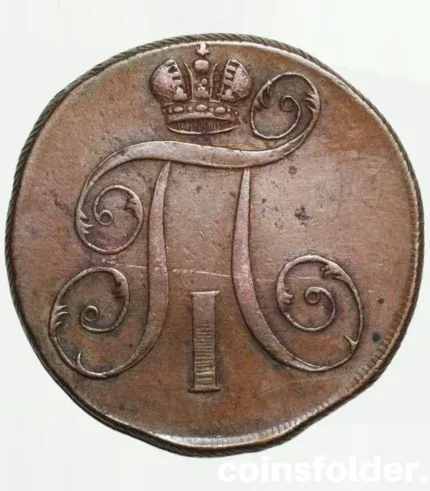
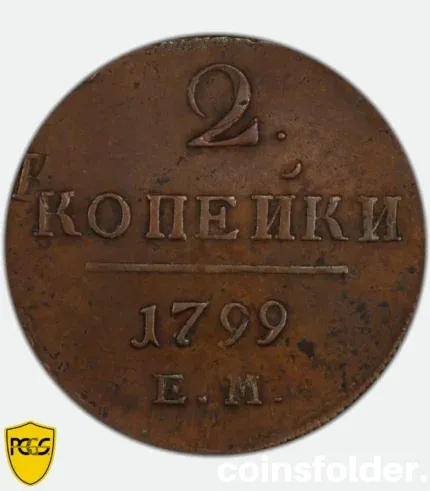
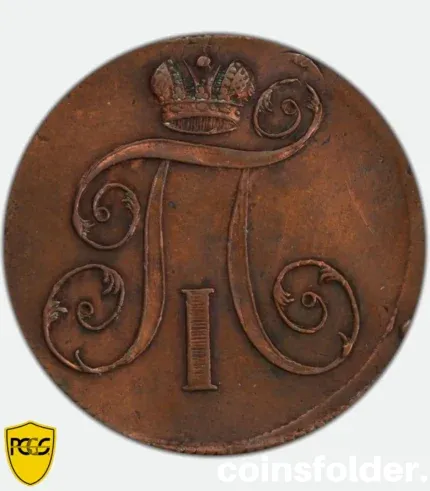
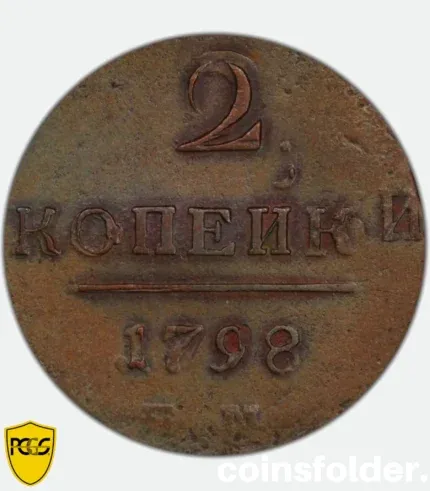
This 1798 Russian 2 Kopecks is a rare copper coin featuring a clearly visible double strike mint error, certified and graded XF40 by PCGS. Struck at the Ekaterinburg Mint (ЕМ) during the reign of Emperor Paul I, this coin represents an important phase of late 18th-century Russian Imperial coinage. Moreover, the presence of a mint error significantly increases its numismatic interest and collector demand.
Distinctive Double Strike Characteristics
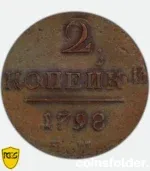
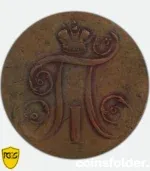
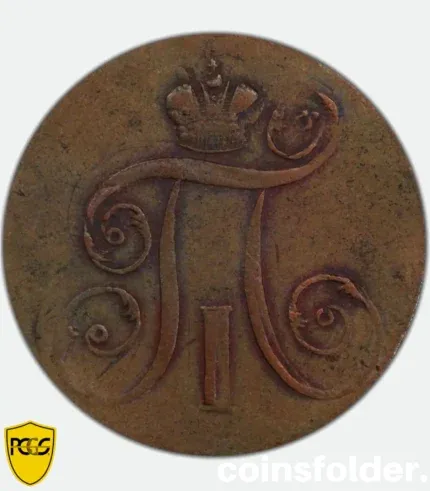
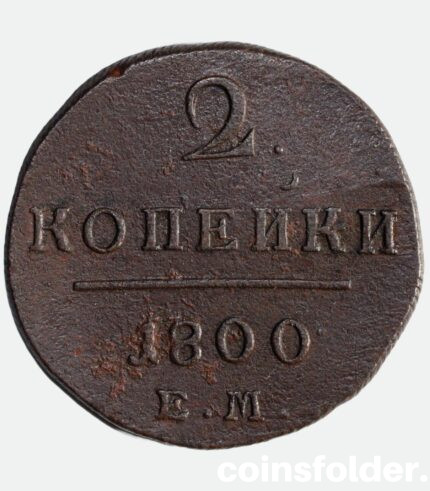
Unlike standard issues, this 1798 Russian 2 Kopecks shows evidence of two separate strikes from the dies. As a result, overlapping and shifted design elements appear on both the obverse and reverse. These features remain clearly visible and easy to identify. Therefore, the coin offers strong visual impact while retaining essential design clarity. Importantly, the double strike occurred during the original minting process, confirming its authenticity as a genuine mint error.
Condition, Detail, and Certification
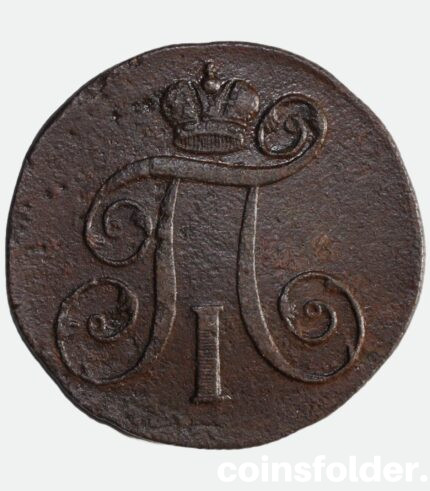
Graded Extremely Fine (XF40), this 1798 Russian 2 Kopecks displays sharp lettering, a well-defined crowned monogram of Paul I, and a clearly legible denomination and date. Additionally, the coin retains an attractive natural brown patina, which enhances its historical appearance without hiding important details. PCGS certification further strengthens its value by guaranteeing authenticity, professional grading, and long-term preservation.
Historical and Numismatic Context
The Ekaterinburg Mint played a crucial role in supplying copper coinage across the Russian Empire. However, mint errors rarely survived, because officials typically removed flawed pieces from circulation and melted them. For this reason, certified error coins from this period remain scarce today. Consequently, collectors highly prize the 1798 Russian 2 Kopecks double strike among Russian Imperial issues.
Collector Appeal and Investment Value
This 1798 Russian 2 Kopecks appeals to collectors of Imperial Russian coinage, certified mint errors, and historically significant copper coins. Furthermore, its PCGS certification, strong eye appeal, and clear error characteristics make it suitable for both advanced collections and long-term investment holdings. Ultimately, this coin offers a rare opportunity to acquire an authenticated 18th-century mint error with lasting historical and numismatic value.

Country of Origin
Russia

Material
Copper

Original
100 % Authentic

Measurements
35 mm

Weight
20,48 g

Condition
XF40
| Weight | 0,060 kg |
|---|---|
| Brand | Paul I |
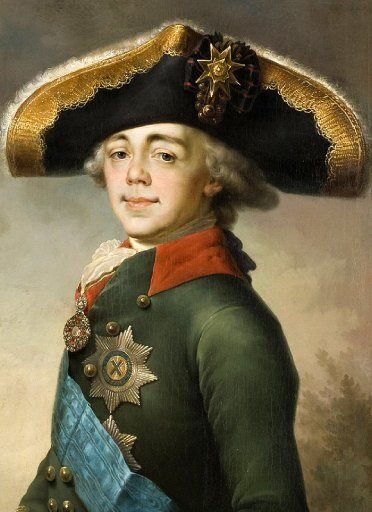
Paul I (1796-1801)
Paul I ( Pavel I Petrovich; 1 October 1754 – 23 March 1801) was Emperor of Russia from 1796 until his assassination. Officially, he was the only son of Peter III and Catherine the Great, although Catherine hinted that he was fathered by her lover Sergei Saltykov. Paul remained overshadowed by his mother for most of his life. He adopted the laws of succession to the Russian throne—rules that lasted until the end of the Romanov dynasty and of the Russian Empire. He also intervened in the French Revolutionary Wars and, toward the end of his reign, added Kartli and Kakheti in Eastern Georgia into the empire, which was confirmed by his son and successor Alexander I.
He was de facto Grand Master of the Order of Hospitallers from 1799 to 1801 and ordered the construction of a number of Maltese thrones. Paul's pro-German sentiments and unpredictable behavior made him unpopular among Russian nobility, and he was secretly assassinated by his own officers.
Related products