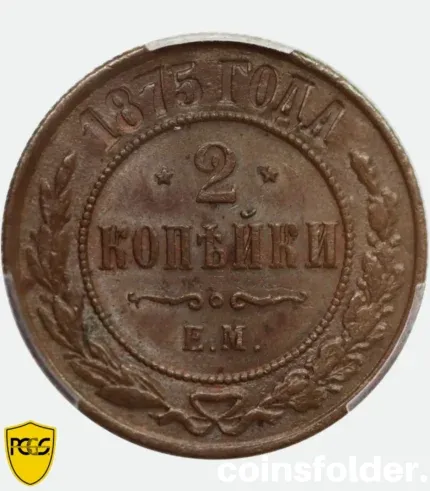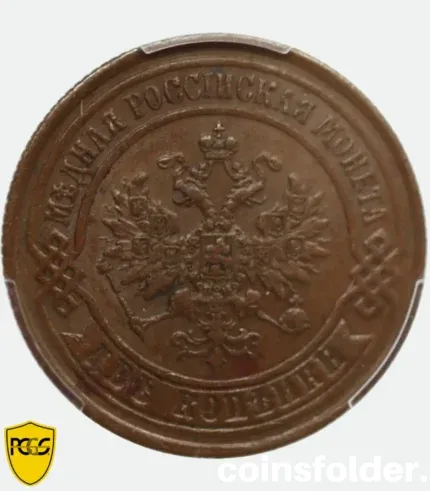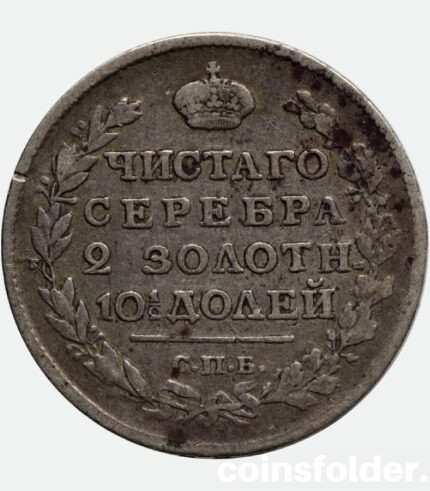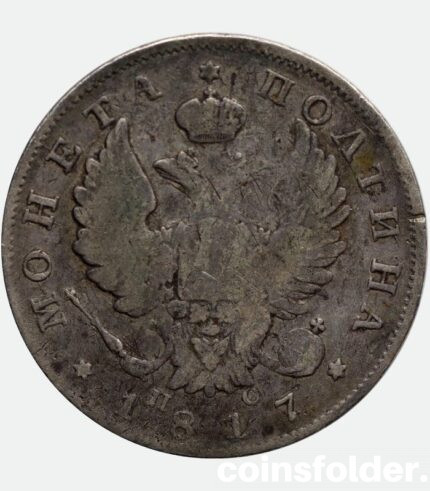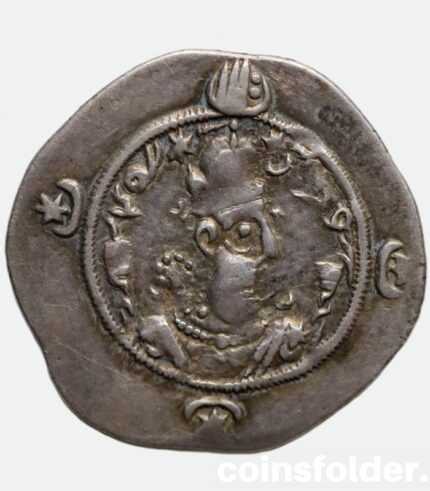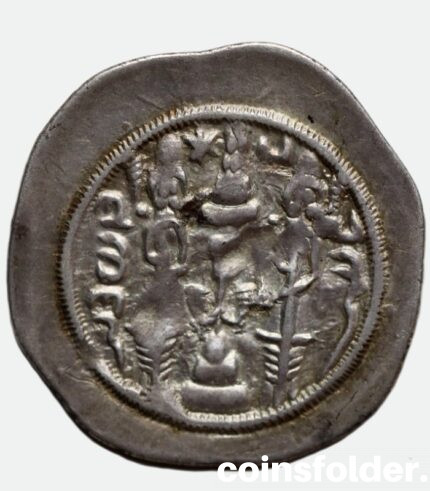


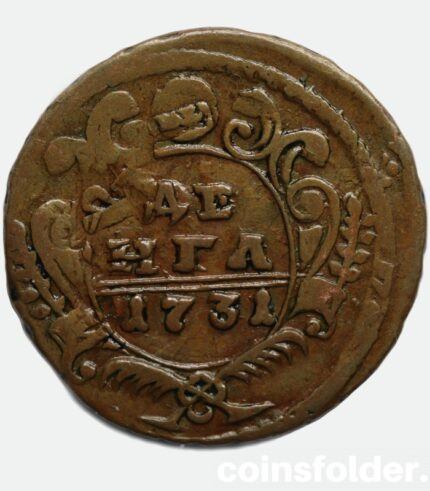
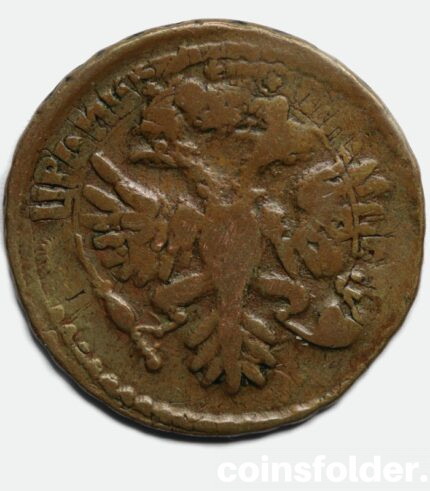
1731 Russian Denga – Perechekan Overstrike, Copper Coin, VF
29,99 €
| Metal | Copper |
| Weight | 8,19 g. |
| Diameter | 28 mm. |
| Bitkin # | 272 |
1 in stock
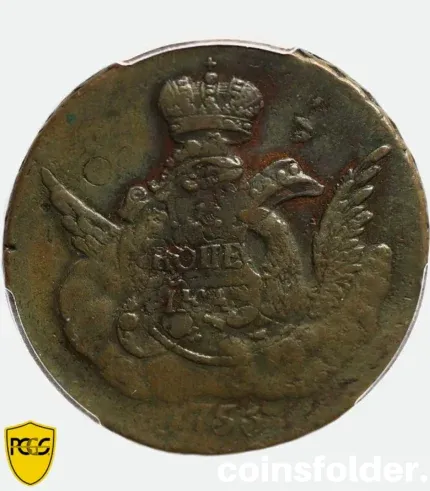
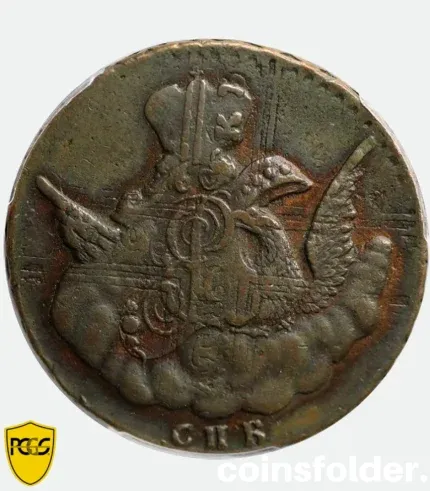
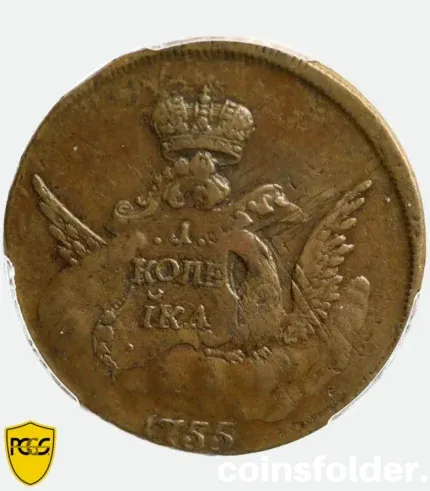
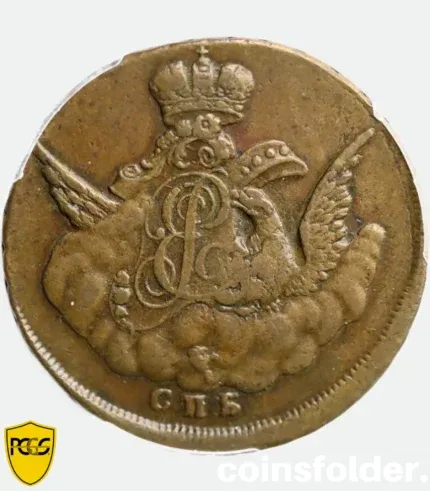
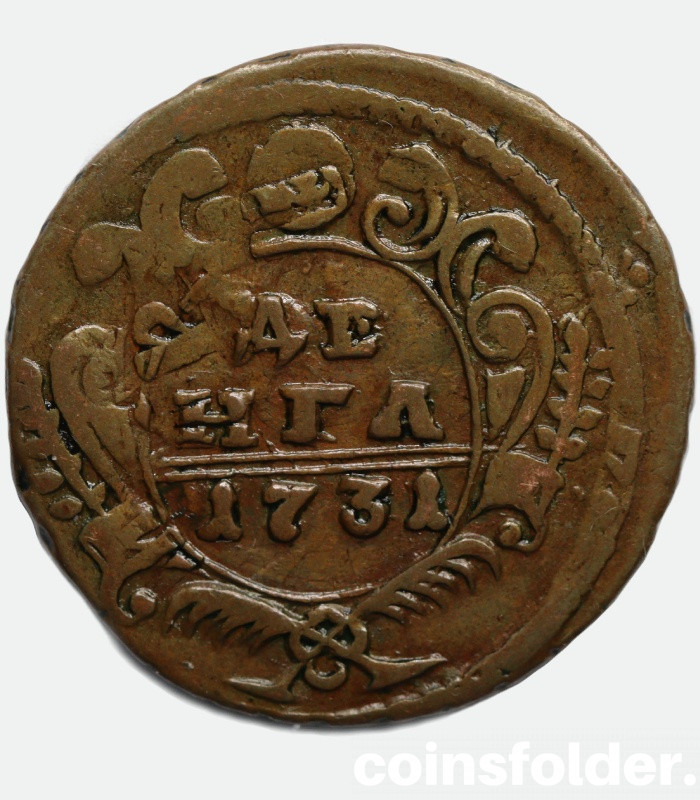
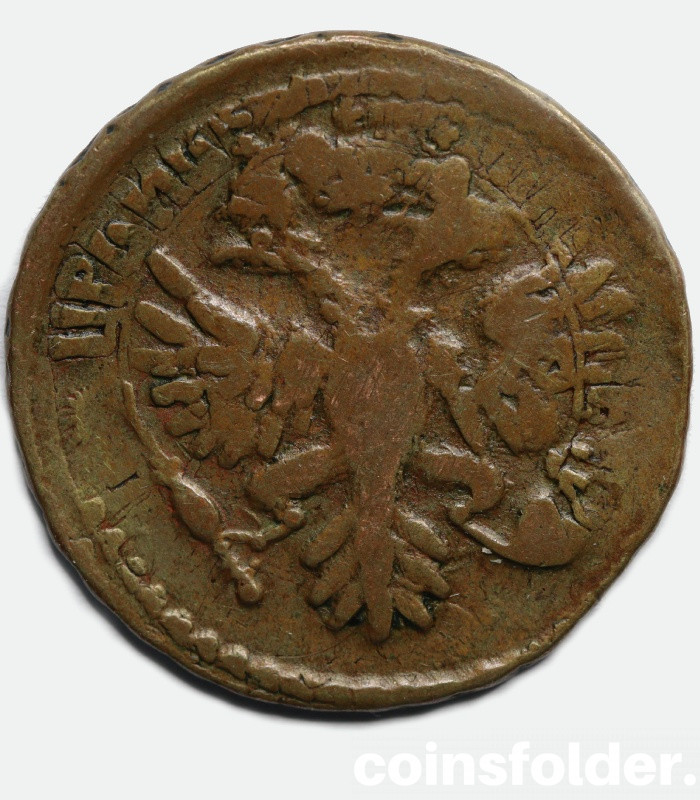
1731 Russian Denga – Perechekan Overstrike, Copper Coin
Early 18th-Century Russian Copper Coinage
The 1731 Russian Denga is a historically significant copper coin from the early Imperial period, issued during the reign of Empress Anna Ioannovna. This example is a Perechekan, meaning it was struck as an overstrike on an earlier coin, a practice commonly used during periods of monetary reform and metal reuse. From the first sentence, the 1731 Russian Denga stands out as both a monetary instrument and a witness to early Russian minting practices.
Perechekan Overstrike Characteristics
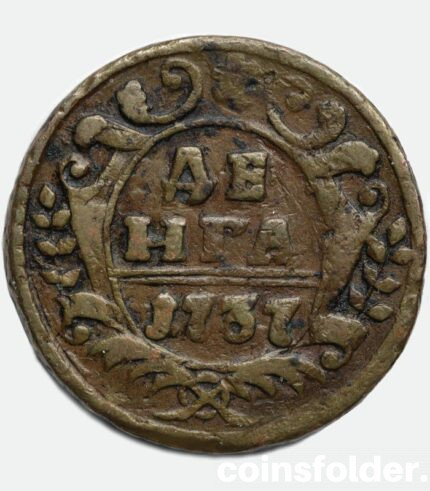
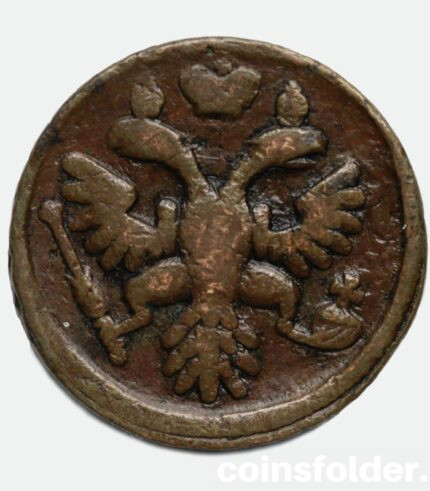
The term Perechekan refers to a re-struck coin, where an existing copper coin served as the host planchet for a new design. As a result, traces of the underlying earlier coin often remain visible beneath the later strike. On this 1731 Russian Denga Perechekan, remnants of the previous design may be observed in the fields or around the lettering, adding complexity and individuality to the piece. Consequently, no two Perechekan coins are exactly alike, which significantly enhances collector interest.
Design and Minting Details
The obverse of the 1731 Russian Denga typically features the denomination and Cyrillic inscriptions, while the reverse displays the imperial emblem consistent with early 18th-century Russian copper coinage. Despite the overstrike, the main design elements remain identifiable, demonstrating effective striking despite metal reuse. Moreover, the compact size and utilitarian design reflect the coin’s role in everyday commerce across the Russian Empire.
Historical and Numismatic Context
During the early 1730s, Russia experienced ongoing monetary adjustments, prompting the reuse of older copper coins to meet circulation demands. Therefore, Perechekan issues like the 1731 Russian Denga provide direct insight into imperial fiscal policy and mint efficiency. Collectors value these coins not only for their age but also for the layered history physically embedded in the metal.
Collector Appeal and Long-Term Value
This 1731 Russian Denga Perechekan appeals strongly to collectors of early Imperial Russian coinage, overstrikes, and minting anomalies. Furthermore, its age, production method, and historical relevance make it a compelling addition to both specialized collections and broader early-modern numismatic sets. Ultimately, this coin offers a rare opportunity to own a tangible artifact from Russia’s early imperial monetary system.
👉 Add this 1731 Russian Denga Perechekan to your collection today and secure an authentic overstrike from early Imperial Russia.

Country of Origin
Russia

Material
Copper

Original
100 % Authentic

Measurements
28 mm

Weight
8,19 g

Condition
VF
| Weight | 0,009 kg |
|---|---|
| Brand |
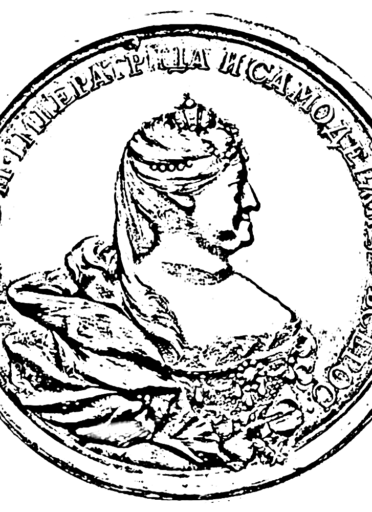
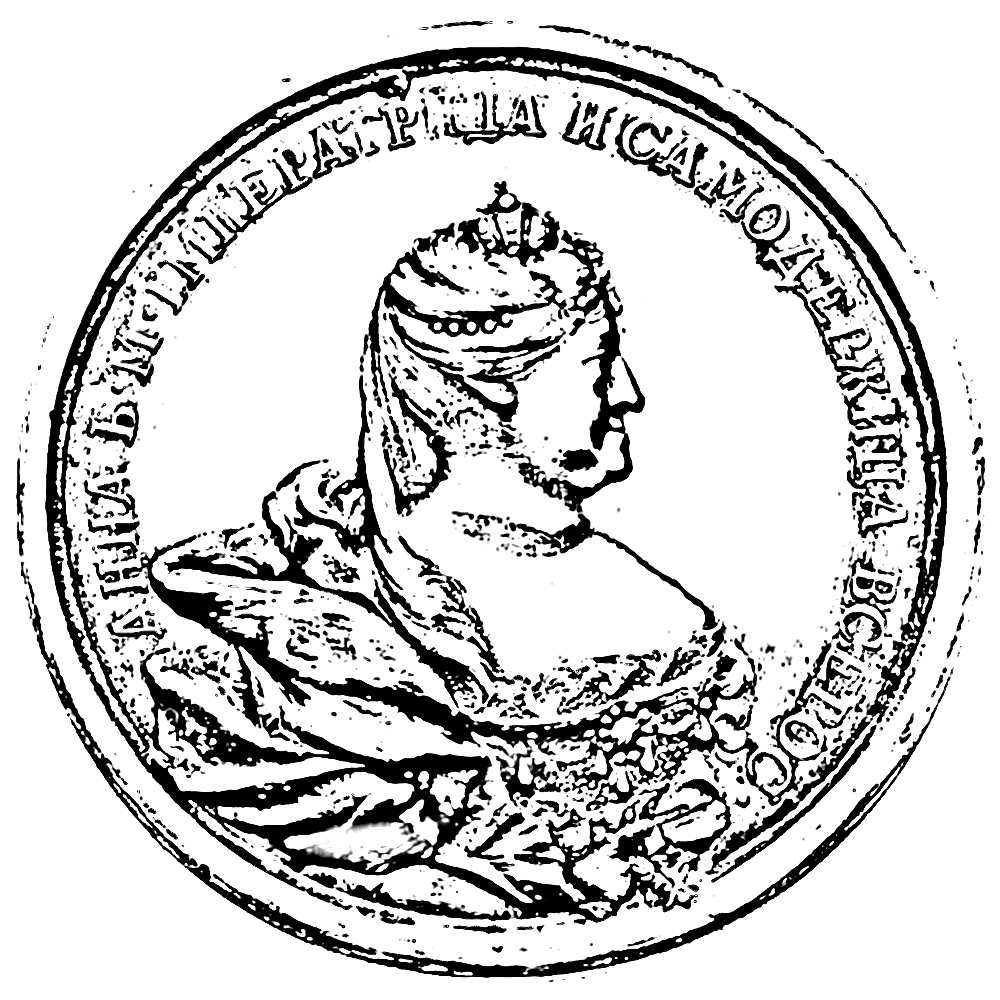
Anna Ioannovna (1730-1740)
Anna Ioannovna (Russian: Анна Иоанновна; 7 February 1693 – 28 October 1740), also russified as Anna Ivanovna, served as regent of the duchy of Courland from 1711 until 1730 and then ruled as Empress of Russia from 1730 to 1740. Much of her administration was defined or heavily influenced by actions set in motion by her uncle, Peter the Great, such as the lavish building projects in St. Petersburg, funding the Russian Academy of Science, and measures which generally favored the nobility, such as the repeal of a primogeniture law in 1730. In the West, Anna's reign was traditionally viewed as a continuation of the transition from the old Muscovy ways to the European court envisioned by Peter the Great. Within Russia, Anna's reign is often referred to as a "dark era".
Related products